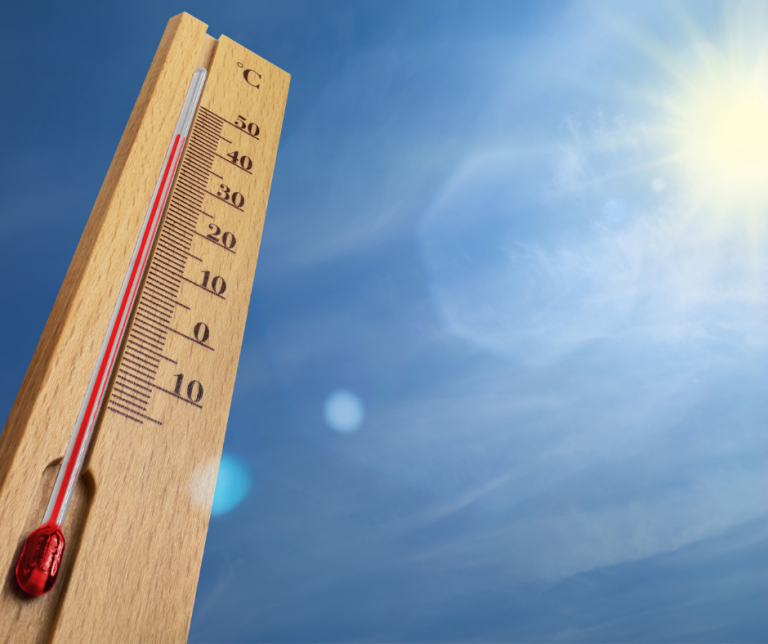
Summer is here, temperatures are rising and heat records are also becoming more frequent in Europe.
Extreme heat puts a strain on us all, which is why we are setting an example for heat protection and informing you about what you should consider in the workplace to protect yourself and others.
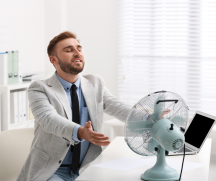
In the office
Whether in an administrative office or a doctor’s surgery, it is often difficult to concentrate in extreme heat.
Although there is no entitlement to time off due to the heat or to air-conditioned rooms, the Workplace Regulations (ArbStättV), Rule ASR A3.5, stipulate that the room temperature for indoor work must not exceed 26°C.
- Workplaces should not exceed 26°C.
- At temperatures between 26°C and 35°C, protective measures are required.
- Working at temperatures above 35°C is only permitted with special protective measures in place.
What should be done?
- Use fans in cases of heat that is not too humid.
- When using air conditioning, ensure that the temperature difference between indoors and outdoors does not exceed 6°C, as this can otherwise lead to "heat shock" when leaving air-conditioned areas.
- Ensure regular drink breaks and provide chilled drinks in the break rooms.
- Open windows on opposite sides of the room to ventilate when work begins in the early morning hours.
- Where there are dress codes, ensure that clothing is loose-fitting, lightweight and breathable.
- Where possible, only operate heat-generating equipment and electrical appliances when necessary.
On construction sites
Working outdoors in extreme heat can increase the risk of accidents at work and heatstroke, particularly during heavy labour, so it is important to take protective measures in good time.
- Make sure to obtain protective equipment such as weather tents, water containers, cooling vests, fans or cooling clothing well in advance.
BG BAU offers financial grants for this equipment through the occupational safety grants ‘Technical UV Protection’ and ‘Personal UV and Heat Protection’ - Schedule physically demanding tasks for the morning and, if possible, start the working day one to two hours earlier.
- Provide shelter in the form of weather-proof tents and, where possible, carry out preparatory tasks there.
.png?height=231&width=276)
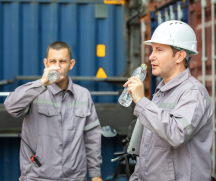
- Allow for extra breaks:
Ideally, a drink break every 15–30 minutes
A 5-minute break every hour; during periods of high exertion, the break should be longer. - Break areas should be as cool and shaded as possible to aid quicker recovery.
- Ensure there are plenty of cool drinks available near the workplace and in the break rooms. Water, fruit teas and drinks rich in electrolytes are particularly good for replenishing mineral levels.
- Regarding workwear:
Necessary personal protective equipment (PPE) must be worn, but otherwise, ensure that clothing is as breathable, long-sleeved, light-coloured, lightweight and loose-fitting as possible.
Use safety helmets and headgear with neck protection, as well as UV-protective glasses (sunglasses).
- Look out for one another!
Heat tolerance varies from person to person. When working outdoors, certain groups of people are particularly at risk. You should therefore keep an eye on employees who are older, carrying out heavy physical work, wearing protective clothing or are new to the job, and encourage them to take breaks and stay hydrated.
Working from home
When working remotely or from home, at first glance it may seem that each employee is responsible for their own working environment. However, health and safety regulations still apply. You should therefore follow these tips to ensure you can work effectively, even in extreme heat.
- Ventilate the room during the night or in the early hours of the morning.
- Temporary relocation to company premises for employees whose homes do not meet the temperature requirements.
- Relaxation of dress code requirements.
- Where appropriate, provision of fans by the employer.
- Adjust working hours, by mutual agreement, to cooler times of the day.
- Ensure regular fluid intake and use cooling towels.
Sources:
https://www.bgbau.de/service/angebote/arbeitsschutzpraemien
https:// www.bgbau.de/service/angebote/medien-center-suche/medium/hitzeaktionsplan-outdoor-baustellen
https://www.baua.de/DE/Themen/Arbeitsgestaltung/Physikalische-Faktoren/Klima-am-Arbeitsplatz/Sommertipps
https://idw-online.de/de/news856450
https://hitzeaktionstag.de/